

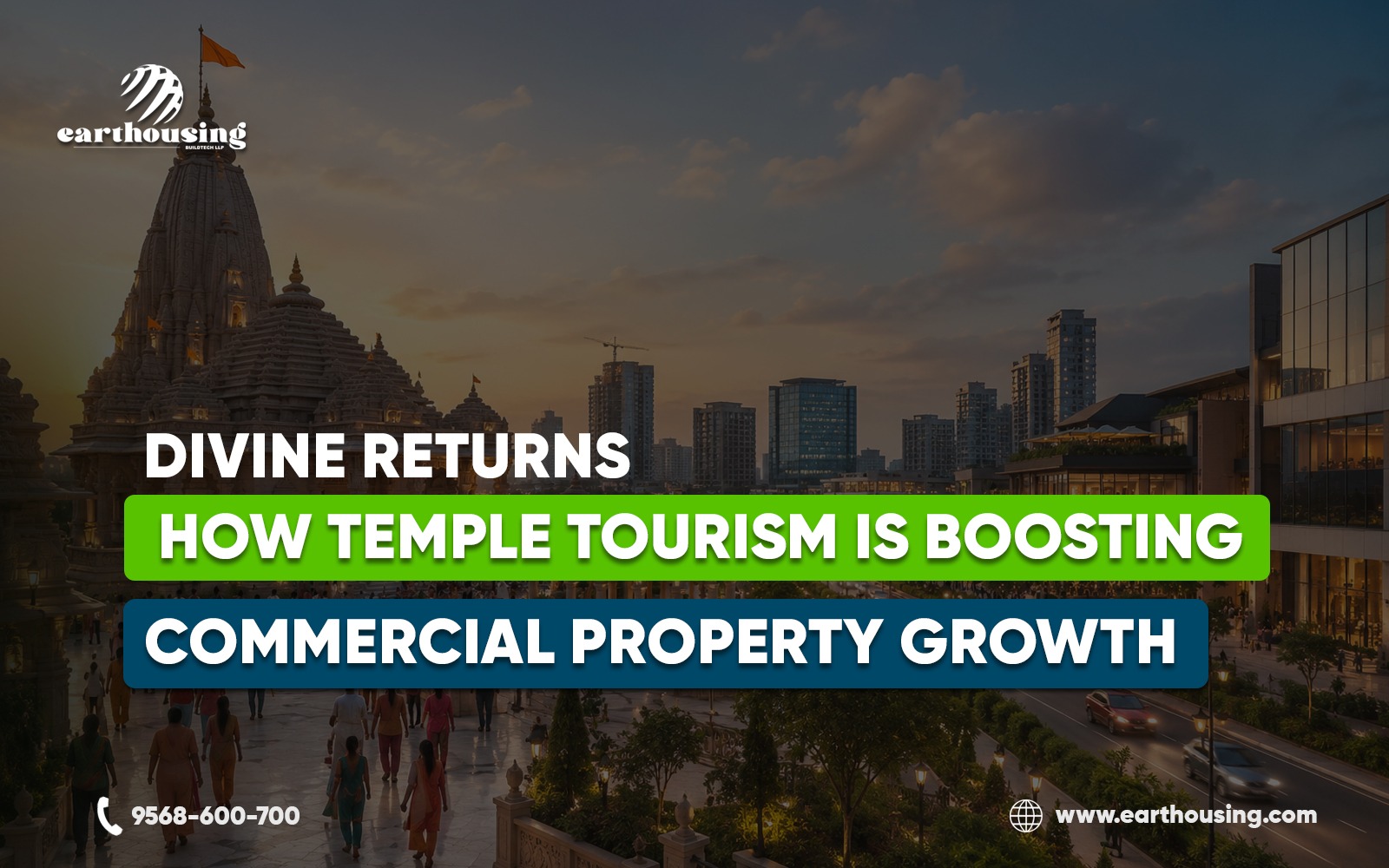
Vrindavan's skyline is changing. Once a realm of crumbling temples and simple ashrams, it is now transforming into an area of glass skyscrapers and modern-style shopping malls. With 2026 just around the corner, the line between faith and finance has never been clearer. The increase in the "Spiritual Tourism" is not confined to seasonal pilgrimages that happen only so, with no break, a year-round economic engine, directly stimulating an unprecedented boom in Commercial Property of Vrindavan.
The story has turned on investors. Residents are still the darling, but smart money is quickly turning towards commercialism. Let us see how temple tourism is knitting up a new economic fabric of the Braj region and why Vrindavan property has been termed as the largest commercial gold mine.
The "Corridor Effect" and Commercial Expansion
The single biggest factor for the commercial development has been the setting up of the Banke Bihari Heritage Corridor. Like Varanasi, a fashion of pilgrims will need an infrastructure with luxury stores, storage facilities, food offices, and souvenir shops around them.
The government is planning more areas for specific purposes of widening the way to accessible business properties in Vrindavan. Organised retail players, branded showrooms, and availability of abstract cafes that now serve a worldwide consumer have replaced small-scale vendors.
The Shift from Pilgrims to "Spiritual Tourists"
A pilgrim is not the same as a spiritual tourist. The 21st-century traveller wants blessings but also wants modern amenities in terms of high-speed internet, air-conditioned restaurant dining experience, and luxe retail therapy.
In turn, this demographic shift has opened up a huge chasm in the market for:
Boutique Hotels & Resorts: Commercial land for hospitality is like gold, with a potential 90% of room nights sold on weekends and festivals.
Fine Dining & QSRs: International brands have now also engaged in a land-grab of premises adjacent to the Prem Mandir and Iskcon Temple.
Wellness Centres: Ayurveda spas and yoga retreats are very much in demand; hence, they require large commercial square footage.
Infrastructure: The Backbone of Commercial Success
Infrastructure is the bridge between a "holy town" and a "commercial hub." By 2026, several key projects will have reached fruition:
Connective tissue: Well connected by the Yamuna Expressway and the newly flagged Jewar Airport, it has become a "day-trip" or "weekend-trip" place of high-spending urbanites from New Delhi, Noida, and even overseas.
The Light Metro Rail: Any property in Vrindavan that is near transit stations can see its value skyrocket due to the proposed connectivity within the Braj circuit.
Parking and Public Utilities - The birth of multi-level parking complexes is developing fresh micro-markets for commercial kiosks and service-driven enterprises.
Retail Revolution in the Land of Krishna
The retail landscape in Vrindavan is no longer limited to religious artefacts. We are witnessing the rise of "Spiritual Malls"- complexes that house everything from high-end ethnic wear brands to organic food stores and digital art galleries themed around the life of Lord Krishna.
The New Transformation, a Commercial Property Investment in Vrindavan, now stands for two Reasons.
High Rental Yields: Commercial properties often attract much higher rentals than residential units, especially in busy areas.
Capital Appreciation: As the limits of a city are set larger, commercial land banks on the peripheries (nearby MHADA New Vrindavan townships) are undergoing appreciation at an astounding 25-30% per annum
Why the "Sun Never Sets" on this Investment
Temple tourism, unlike our industrial hubs that respond to the market cycle or the IT hub with its dependence on a corporate policy, is recession-proof. Faith is a permanent driver. Devotees still continuously pour into Vrindavan even during times of economic downturns.
This means that the consumer base is steady. Whether you are a small retail shop or a big banquet hall adequate for large destination weddings (a new trend in Braj), the footfall is guaranteed by the magnetic force of the City.
Strategic Locations for Commercial Investment
If you want to buy a property in Vrindavan for commercial reasons, target these areas with high growth:
Chhatikara Road is like the entry point of Vrindavan and is highly suitable for hotels as well as big box stores.
Sunrakh Road: New hub for luxury resorts and wellness retreats
Parikrama Marg: Best suited for smaller retail units and specialised service centers that will serve the walking pilgrims.
NH-19 (Delhi-Agra Highway) Facade: Best for logistics & large warehouse & wayside amenity
The Earthousing Advantage
You need a partner in the commercial real estate market space who understands both local sentiment and global standards of development. Earthousing is leading the region in identifying commercial pockets with strong potential.
From providing clear-titled land to developing integrated townships that include commercial zones, Earthousing ensures that your investment in property in Vrindavan is secure, scalable, and sustainable.
Conclusion: Seize the Divine Opportunity
The new image of Vrindavan as a world-class spiritual city will soon no longer be a vision for the future but a reality in 2026. The stars have aligned with a combination of government and private spending to create the optimum conditions for commercial success.
Investing in Commercial Property in Vrindavan is a commitment to the future of one of the world's most dynamic cultural landscapes. As footfalls continue to break records, the value of commercial space will only go one way: Up.
Ready to explore high-yield commercial opportunities? Visit Earthousing today and find your place in the future of Vrindavan.