
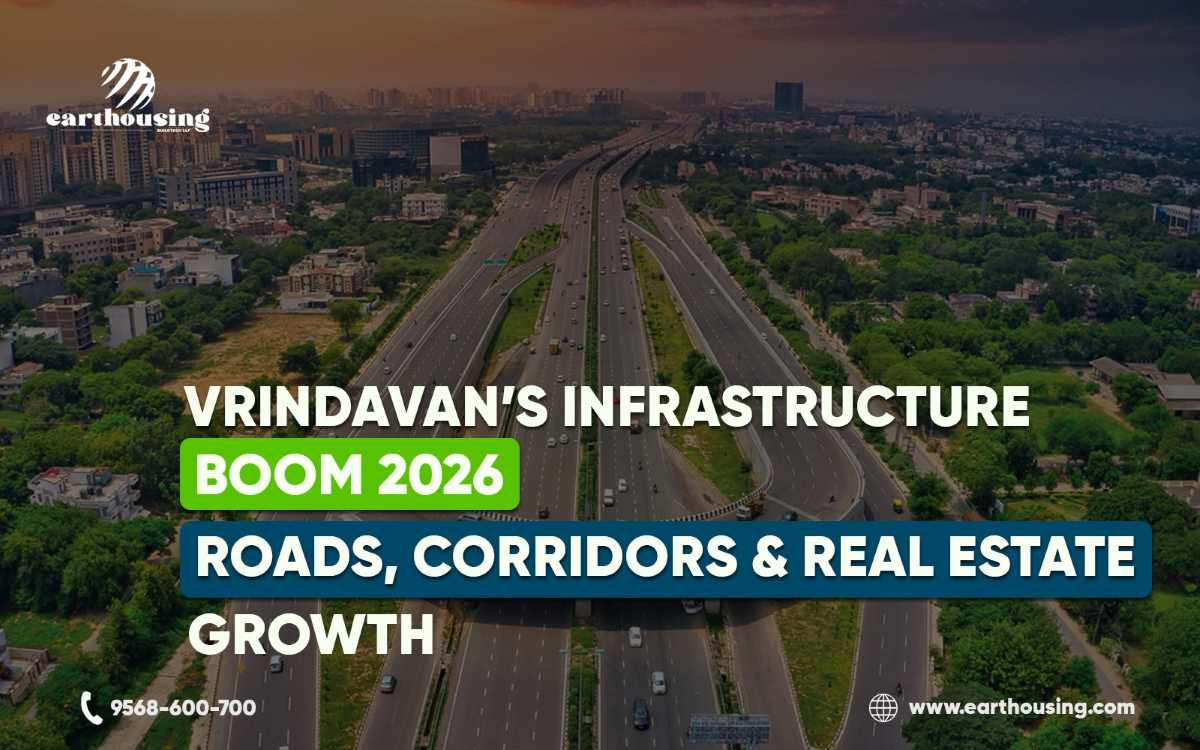
All around the Brij area, you can now see the transformation of Vrindavan from what is was (Old, narrow, and very busy) to what it is becoming (New, wide-open, and up-to-date).
In fact, Vrindavan is also being turned into one of the fastest-growing real estate areas within Uttar Pradesh.
For investors, devotees, and retirees, the narrative has shifted. The question is no longer if one should invest in Braj, but where and how quickly. This surge in interest is not accidental; it is the direct result of a massive convergence of government spending and private investment. From the operational Vrindavan infrastructure development projects to the ambitious "New Vrindavan" master plan, the city is presenting a case study in how modern urban planning can coexist with ancient heritage.
The Crown Jewel: The ‘New Vrindavan’ Heritage City
The most significant driving force behind the 2026 boom is the massive Heritage City project located at the Raya Urban Node along the Yamuna Expressway. The project is being developed by the Yamuna Expressway Industrial Development Authority (YEIDA). Late in 2025 the Heritage City project was expanded substantially to meet the surging demand for real estate.
The Heritage City, also referred to as the "New Vrindavan," is being developed using a different hybrid model rather than the traditional urban township model. In this new hybrid model, YEIDA manages both the residential and commercial clusters within the Heritage City while the roads, utilities, social infrastructure, and support commercial and residential development are built and managed by public-private partnerships.
With an incredible vision for the Heritage City, a dedicated heritage corridor will run along and flank the 30-kilometer Yamuna riverfront, include a 100-foot statue of Lord Krishna, and contain designated zones for wellness and yoga centers among others.
For the real estate market, this represents a clear indicator that the direction of development has shifted from the heavy congestion of the old city to the planning and development of large, relatively uncongested areas on the outskirts. The new Heritage City of "New Vrindavan" is designed to intercept millions of tourists travelling on the expressway while providing world-class accommodations, and, thus, relieving the congestion and pressure on the existing downtown area as well as creating a new premium property market.
The Corridor Effect: Reshaping the Old City
As Vrindavan's suburbs continue to grow, the city's core is being re-imagined via the new Temple Corridor located at the Banke Bihari Temple. Work began on this major redevelopment project after the Supreme Court of India gave its approval in 2025 for the ₹500 crore investment into this redevelopment project. Since then, work has progressed rapidly.
The Temple Corridor will help alleviate congestion near the Banke Bihari Temple and has similarities to the Kashi Vishwanath transformation project.
In addition, wider pedestrian pathways, improved crowd management have resulted from the acquisition of 5.5 acres of land surrounding the temple area.
However, the impact on property values to be seen as a direct result of the Temple Corridor Project can only be described as "shocking". In fact, property prices surrounding the Temple Corridor are now at a historic high, with many prime pieces of commercial real estate being valued in excess of ₹5 lakh ($1,200 USD) per square yard. This is an unprecedented per-square-yard value in what was once considered to be a relatively spiritual town. As a result of this Corridor Effect, properties within a 5 km radius of the Banke Bihari Temple have also increased in value, as they offer greater accessibility and increased foot traffic..
Connectivity 2.0: The Lifeline of Growth
Due to the rapid improvements in consistent connectivity to Vrindavan from Delhi-NCR, it is no surprise that more and more development projects will come online between now and 2026.
Greenfield Expressway Link: The new greenfield expressway is critical in that it allows for direct access from the Heritage City site (Vrindavan) to the Banke Bihari Temple. By eliminating the curves of the old road and avoiding flood-prone areas, pilgrims can travel to Vrindavan in less than 20 minutes.
Yamuna Expressway Link Road: The newly constructed ₹250 crore link road connects the Yamuna Expressway to the Pagal Baba Temple and is currently the most important road into the city. Now that it is fully functional, this link road will enable visitors to bypass the awful traffic jams on the old Mathura Road and drive directly into the city over the new bridge.
Green Transport: As part of the Hayana State Government's initiative to promote sustainable vehicles, 2026 will see the introduction of pilot programs for hydrogen fuel buses in the Yamuna City area as the region continues its commitment to environmentally friendly mass transit..
The Economics of Faith: Rental Yields and ROI
Investors are flocking to Braj because the data supports it. Many investors look to the "religious tourism" sector, which will be unaffected by a down economy; and Vrindavan is positioned as the star of the market. Recommendations for increased infrastructure in this area also mean that the rental market is finally maturing. The rental market consists of more than just dharamshalas and there is a strong demand for quality homestays/services apartments and weekend houses.
Market research shows that similar religious centres are producing gross rental yields ranging between 4% and 10%, and properties located near the new corridors will most likely perform above the average. Looking forward to purchasing property in 2026, the math is clear. A weekend home (or spiritual retreat) in Vrindavan meets a personal need for peace and retreat, while also producing significant rental returns from the many visitors to the region who continue to choose high-end, hygienic accommodations over budget lodges.
Why "Plots" Are the Gold Standard in 2026
Although high-rise apartments are popular, the main property type in 2026 will be land. In Vrindavan, demand for land has never been higher. This is because of the availability of land in a growing heritage city and because owning land provides investors with the most options and the greatest potential for appreciation. The logic behind this is simple: it is becoming increasingly scarce.
As the government continues to purchase large sections of land for the Heritage City and associated corridors, it continues to reduce the amount of private land available for sale that is also free from litigation.
Investment interest is firmly directed towards platted developments that provide numerous benefits, such as:
Gated Security: A necessity for those who do not live in the town or city but own property there ( absentee owner).
Modern Infrastructure: Underground sewage systems and electrical supply along with road systems that previously could not be found on the fringes of the developing areas, now common features of many developments such as HOABL Plots, Vrindavan, and other high-end projects.
Flexibility: Owning the plot today, while having the ability to build an executive retirement ashram later when ready to retire, providing for capital appreciation during that time frame.
The Lifestyle Upgrade: Beyond Retirement
The change in buyer demographics in 2026 saw Vrindavan not only being a place for senior citizens but also a place for young professionals that could live there and work there. The ability to "work from home" thanks to improvements in the area with the new wellness-focused infrastructures and the widespread availability of high-speed internet has attracted many younger professionals to Vrindavan. The construction of Yoga Centers, Convention Centers, and Cultural Parks as part of the Master Plan 2031 for Vrindavan is helping to reestablish it, as a centrally-located city for Holistic Wellness, that not only gives modern conveniences to the modern-day worker but also provides an opportunity for people to "live, work, and heal" while in the city instead of just being a "tourist destination."
The Earthousing Advantage
Navigating a booming environment necessitates an understanding of both the spiritual sentiment and investment logic of the region. There are numerous available options within Vrindavan; however, not all upcoming projects are alike.
Earthousing offers a variety of investment opportunities based on the convergence of infrastructure growth dynamics during this current time. The primary foci of investment opportunities include:
Location Adaptability - Developing projects located along the new 7km (approximately) expressway and near heritage cities.
Legal and Safety - Offering Only Approved Investment opportunities from the MVDA or other governing authorities, with no legal encumbrances associated with development in this region.
Future Proofing - Selecting communities exhibiting projected growth trajectories identified in the 2031 Master Plan..
Conclusion
In 2026, the story of Vrindavan is a blend of "spirituality and modernization". The current Vrindavan infrastructure project is a part of the foundation of what will be a global city that will attract tens of millions of visitors each year.
For an intelligent investor, the signs are clear. The construction of the Banke Bihari Corridor has resulted in a price increase to ₹5 Lakh per square yard for prime property. Additionally, the development of the Heritage City is transforming the entire area surrounding Jerusalem, which is making it increasingly difficult to find prime real estate at a good price. When you purchase plots in Vrindavan, you are not only making a financial investment; you are also investing in the future of India's cultural capital.